
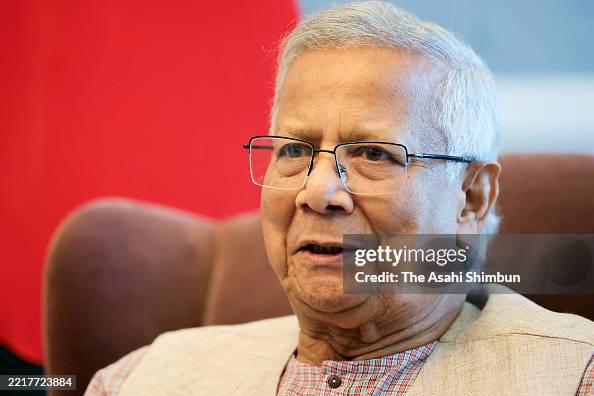
Muhammad Yunus
Chief Adviser of Bangladesh  Bangladesh
Human Rights Violation
In 2024–2025, Bangladesh experienced a surge of concern from Hindu, Buddhist, and Christian minority organisations over attacks, discrimination, and land-grabbing incidents reportedly targeting their communities.
These concerns have been widely documented by rights groups like Amnesty International, Human Rights Watch (HRW), and the Bangladesh Hindu Buddhist Christian Unity Council (BHBCUC).
When Muhammad Yunus - a Nobel Peace Prize laureate and one of Bangladesh’s most respected figures - gave interviews downplaying or denying that such anti-minority violence existed, the backlash was strong.
In an interview with Zeteo in September 2024, Yunus stated:
He framed reported incidents as neighbourly disputes between Hindus and Muslims, rather than targeted attacks.
These concerns have been widely documented by rights groups like Amnesty International, Human Rights Watch (HRW), and the Bangladesh Hindu Buddhist Christian Unity Council (BHBCUC).
When Muhammad Yunus - a Nobel Peace Prize laureate and one of Bangladesh’s most respected figures - gave interviews downplaying or denying that such anti-minority violence existed, the backlash was strong.
What Yunus said (in brief)
In an interview with Zeteo in September 2024, Yunus stated:
There is no anti-Hindu violence in Bangladesh. These are fake news stories... one of India’s specialities is fake news.
He framed reported incidents as neighbourly disputes between Hindus and Muslims, rather than targeted attacks.
Why rights groups criticised him
- Denial of minority persecution
- Rights reports have detailed attacks on temples, homes, and businesses owned by Hindus and Buddhists, especially around elections.
- The BHBCUC stated that his remarks "distort reality and embolden perpetrators of violence."
- Denying the lived experience of victims, they said, silences vulnerable groups and erodes trust in justice systems.
- Undermining advocacy for protection
- When a prominent global figure like Yunus calls such violence "fake news," it risks delegitimising local activists who document abuses.
- Rights groups warned that this kind of rhetoric can make it harder for victims to be believed or protected.
- Political undertone
- Some interpreted his remarks as politically convenient for the government or groups wishing to present Bangladesh as free of sectarian conflict.
- Critics argued that this was a form of image management at the expense of truth and minority safety.
- Failure to uphold moral leadership
- Yunus is celebrated globally for peacebuilding and social justice (via microcredit and Grameen Bank).
- Activists felt that minimising discrimination contradicted the humanistic values he’s known for.
- As one op-ed put it:
When the voice that once uplifted the poor now dismisses the persecuted, it betrays the same principles it once defended.
- Impact on social harmony
- Bangladesh’s minorities often depend on moral and political support from civil society.
- Critics feared Yunus’ words could embolden perpetrators or discourage victims from reporting abuse.
Labour law violations & legal sentences
According to court documents and media reports, the case filed by the Department of Inspection for Factories and Establishments (DIFE) against Yunus (as Chairman of Grameen Telecom) and three other officials alleged violations of Bangladesh’s labour law. Key alleged violations included:
- That Grameen Telecom failed to make certain staff permanent employees (e.g., about 67 workers) though they were eligible.
- That the company did not form or maintain the required Workers’ Welfare Fund / Worker Profit Participation Fund as per the relevant law.
- That the company did not distribute the required 5% dividend to workers (or otherwise meet the statutory obligations under the Labour Act) as alleged.
- There were also claims of failure to provide annual leave with pay, leave encashment, and cash against leave for employees.
- The case was filed on 9 September 2021.
Legal timeline & sentences
- 9 Sept 2021: The case was filed by DIFE with the Labour Court-3 of Dhaka.
- 6 June 2023: Charges framed by the labour court. (As per some reports)
- 1 January 2024: The Third Labour Court of Dhaka (Judge Sheikh Merina Sultana) convicted Muhammad Yunus (as Chairman of Grameen Telecom) and the three other officials. They were sentenced to six months’ imprisonment each, and fined (Tk 30,000 each in some reports).
- 28 January 2024: The Labour Appellate Tribunal granted bail to Yunus and the other three pending appeal.
- 3 July 2024: The High Court ruled that the sentence remains effective until the disposal of the appeal (i.e., conviction stands unless overturned) but noted that the sentence and fine have been stayed while appeals proceed.
- 7 August 2024: A tribunal acquitted Yunus and the three others in this labour-law case.
- 30 October 2025: Reports show that bail in the labour-law violation case was extended until 23 May (2025) under the Labour Appellate Tribunal.