
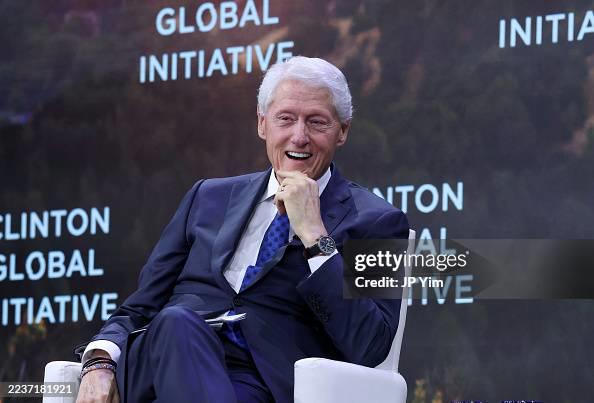
Bill Clinton
42nd U.S. President  United States
Monica Lewinsky Affair & Impeachment (1998)
The Monica Lewinsky affair and impeachment of President Bill Clinton (1998–1999) was one of the most dramatic political scandals in modern U.S. history. It involved allegations of perjury and obstruction of justice tied to Clinton’s sexual relationship with White House intern Monica Lewinsky, leading to his impeachment by the House of Representatives - though he was ultimately acquitted by the Senate.
The Affair
- Lewinsky worked as an intern and later staffer at the White House between 1995–1997.
- She and Clinton engaged in multiple encounters in the Oval Office and other areas of the White House.
- The relationship was consensual, but became a national scandal due to Clinton’s denials under oath in a separate lawsuit (the Paula Jones sexual harassment case).
The Role of Linda Tripp
- Lewinsky confided in her friend Linda Tripp, a Pentagon employee.
- Tripp secretly recorded their phone conversations and turned the tapes over to Kenneth Starr, who was already investigating the Whitewater affair (a separate Clinton controversy).
- The tapes contained explicit details and proof that Clinton and Lewinsky had tried to hide evidence, including gifts and a blue dress with the President’s DNA.
The Legal and Political Fallout
- Clinton was accused of perjury and obstruction of justice after denying the affair in a sworn deposition.
- Starr expanded his investigation, releasing the infamous "Starr Report" (September 1998), which described the affair in explicit detail and recommended impeachment.
- The House Judiciary Committee drafted four articles of impeachment, passing two of them on December 19, 1998.
Impeachment and Senate Trial
- The House impeached Clinton (228–206 on perjury, 221–212 on obstruction).
- The Senate trial, presided over by Chief Justice William Rehnquist, began in January 1999.
Filegate
What Happened
- The White House had a staff office responsible for personnel files.
- Files on 400–900 former Republican officials were improperly copied from FBI background files without authorization.
- The files were used for personnel vetting and possibly to anticipate political opposition, though no criminal intent was found.
Allegations
- Critics alleged that:
- The Clinton administration was using federal agencies for political purposes.
- Hillary Clinton or Bill Clinton personally ordered the collection of the files.
- Investigations found:
- The Office of Personnel Security mishandled the files.
- No direct evidence implicated the Clintons personally.
- The issue was mostly a bureaucratic mismanagement and oversight failure.
Investigations
- FBI – Confirmed files were improperly obtained.
- Department of Justice – Reviewed administrative handling.
- Independent Counsel (Kenneth Starr) – Found no criminal wrongdoing, though criticized the White House for poor management practices.
Outcome
- Bill and Hillary Clinton: No evidence of criminal involvement.
- White House staff: Mismanagement found; some staff reprimanded.
- Legacy: Filegate became a symbol of partisan investigations into the Clinton administration and highlighted poor records management and oversight.
Travelgate
Travelgate was an early scandal of the Clinton administration (1993) involving the firing of seven longtime White House Travel Office employees. It raised questions about nepotism, misuse of authority, and political favoritism - though later investigations found no illegal actions by the Clintons.
The White House Travel Office arranged travel for the press corps during presidential trips - a small but long-established office.
In May 1993:
What Happened
The White House Travel Office arranged travel for the press corps during presidential trips - a small but long-established office.
In May 1993:
- Seven employees, who had served under several presidents, were abruptly fired.
- The administration claimed financial irregularities after an FBI audit.
- However, critics said the real reason was to replace them with Clinton allies, particularly Harry Thomason (a Hollywood friend of the Clintons) and Darnell Martens (his business partner), who wanted to take over travel contracts.
Investigations
- The FBI and GAO investigated allegations of mismanagement and misuse of authority.
- The firings were found lawful, but procedures were improper and the FBI was inappropriately involved at the White House’s request.
- Kenneth Starr’s team investigated whether Hillary Clinton played a central role.
- They found no evidence of criminal wrongdoing, though her statements were described as "inaccurate and misleading."
Major Reports & Findings
- GAO Report (1994): Concluded the firings were "properly within the President’s authority", but handled unprofessionally.
- Independent Counsel Final Report (2000):
No substantial evidence that either President Clinton or Mrs. Clinton violated any law or regulation in connection with the Travel Office matter.
Whitewater real estate controversy
The Whitewater real estate controversy was the first major scandal linked to Bill and Hillary Clinton, long before the Monica Lewinsky affair and impeachment. It centered on a failed Arkansas real estate investment and raised allegations of financial misconduct, fraud, and political favoritism - although no evidence ever proved the Clintons guilty of any wrongdoing.
What Was "Whitewater"?
- The Whitewater Development Corporation was a real estate investment meant to build vacation homes along the White River in northern Arkansas.
- Investors:
- Bill and Hillary Clinton (future President and First Lady)
- James and Susan McDougal (their friends and business partners).
- The business failed, losing money due to high interest rates and poor sales.
The Core Allegations
- The Clintons benefited improperly from loans or illegal activities connected to Madison Guaranty Savings & Loan (owned by James McDougal).
- Political pressure was used to influence regulators or cover up losses.
- Government positions were used for personal financial gain.
The Investigation
- The Resolution Trust Corporation (RTC) first examined Madison Guaranty’s failure in the early 1990s.
- In 1994, an Independent Counsel investigation began under Robert Fiske, later replaced by Kenneth Starr, who expanded the inquiry dramatically.
- The probe uncovered unrelated matters — including the Lewinsky affair, which ultimately led to Clinton’s impeachment.